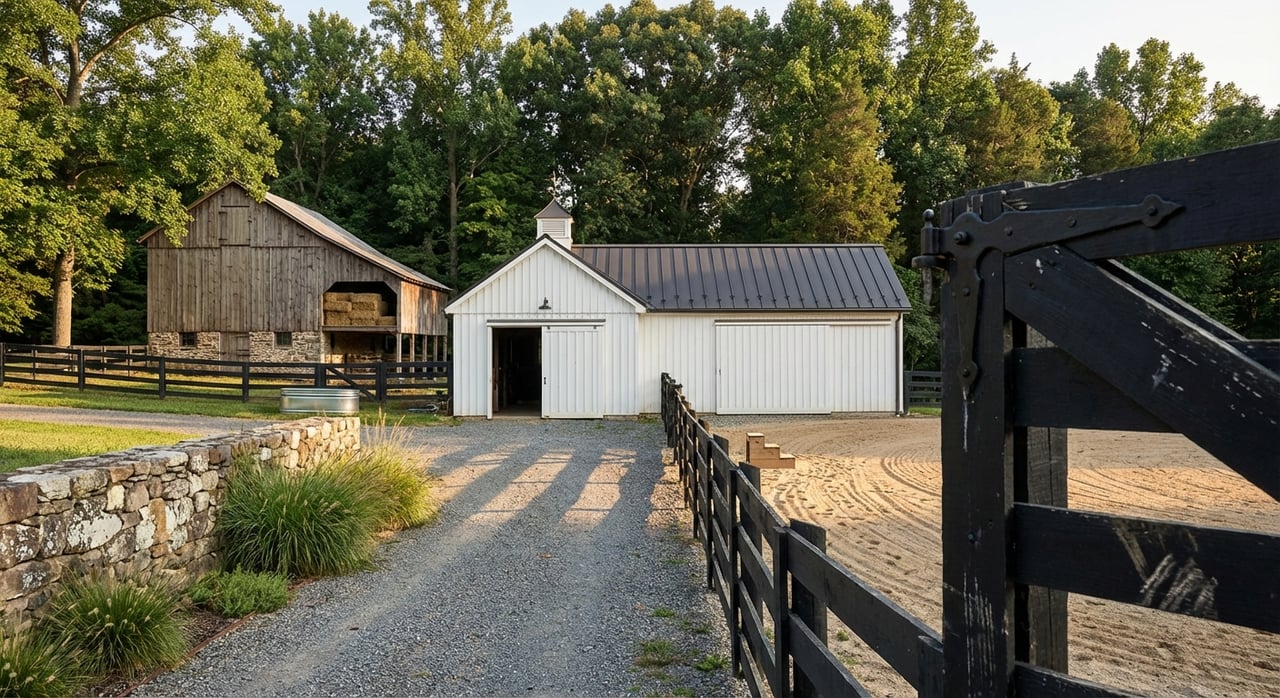
Choosing land for horses in Marshall can feel exciting and overwhelming at once. You want the right acreage, safe facilities, good footing, and easy ride-out without overbuying or underbuilding. This guide breaks down the difference between farmettes and full-scale farms in Fauquier County so you can match your goals to the land and improvements that fit. You will learn what acreage supports, how barns and arenas scale, what to check on taxes and easements, and where to ride nearby. Let’s dive in.
Farmettes vs. full-scale farms
What “farmette” and “full-scale” mean here
A farmette in the Marshall area usually means a smaller equestrian property that supports a private program. Think a primary residence with a modest barn, practical turnout, and an outdoor arena. In local practice, farmettes often sit in the 3–25 acre range. Larger parcels support more horses and more independent operations.
A full-scale farm starts around 25 acres and frequently runs to 100 acres or more in Hunt Country. These properties can support multiple pastures with rotation, larger barns, hay production or storage, and expanded arenas suitable for training or business use. Listings in and around Marshall reflect this spectrum, from a turnkey 24.4-acre equestrian property in an association with shared trails to 100-plus acre offerings marketed for hay, grazing, and full operations. You can see that scale in examples like the 24.4-acre Chartwell property in Bellevue Farms with noted shared trails and the larger acreage options promoted for full operations in regional listings (representative Bellevue Farms example, regional large-parcel example).
How to choose between them
- Choose a farmette if you keep one to three horses and plan to buy hay, trailer out to lessons, or use nearby trails. You prioritize a manageable footprint with safe turnout and a simple barn.
- Choose a full-scale farm if you expect multiple horses, training or boarding, significant hay storage or production, and larger or multiple arenas.
Land and pasture planning
Acreage per horse
As a planning baseline, allow about 2–5 acres per horse for grazing, then adjust for pasture quality, rotation, and supplemental hay. Smaller acreage can work well with dry lots, day paddocks, and purchased hay, especially if you ride off property. This rule of thumb comes from equine facility design guidance that also covers stall sizing, arena dimensions, and storage planning (facility guidance overview).
Hay and storage
A typical 1,000-pound horse eats roughly 1.5 to 2 percent of bodyweight per day in forage. That pencils out to many bales and several tons per horse per year. Plan safe, ventilated storage and easy truck access for deliveries. If you do not plan to grow hay, confirm reliable suppliers and prices.
Usable acreage and topography
Not all acres are equal. Walk the land to separate usable pasture from steep slopes and woodland. Check drainage after rain, look for high-traffic areas that turn to mud, and note how close water and hydrants are to paddocks and the arena.
Barns, stalls, and arenas that work
Barn and stall sizing
A common stall size for an average horse is 12×12 feet, with 12×14 or larger often used for bigger breeds or mares with foals. Aisles around 10–12 feet improve daily flow and equipment access. Safe storage for hay, grain, and tack plus good ventilation matters as much as stall count. Find sizing and layout standards in equine facility design references (stall and layout standards).
Arena dimensions and footing
A practical outdoor arena for general riding often starts near 60×120 feet. Many riders prefer wider or longer dimensions for comfortable canter work. The base, drainage, and footing blend are the key cost drivers to inspect closely. Look for consistent grading, firm base, and even moisture management. Indoor arenas for larger programs are typically bigger, which adds to site planning and power needs.
Fencing, paddocks, and manure management
Fencing choices
Post and rail, board with mesh, high-tensile, and electric tape each balance cost, safety, and maintenance differently. Expect ongoing repairs, especially on older lines or where horses pressure fences. For fence standards and best practices, see NRCS guidance summarized here (NRCS fence practice standard).
Heavy-use areas and mud control
Plan for stabilized gates and high-traffic zones. Stone bases under screenings in these areas can save your footing and reduce winter mud. Check whether the property already has these pads, and ask sellers about drainage history.
Manure and nutrient planning
Every horse property needs a clear plan for manure storage and removal. Options include composting on a designed pad, a spread plan, or contracted haul-off. Extension and conservation resources outline best practices for paddock layout and nutrient management (paddock and manure BMPs).
Taxes, zoning, and conservation
Use-value assessments and A&F districts
Virginia’s land-use, also called use-value assessment, can reduce property taxes if your land meets program criteria. State guidance highlights minimum acreage thresholds and other requirements. Always confirm eligibility and possible rollback liability with the county assessor (Virginia use-value overview).
Fauquier County also administers Agricultural and Forestal Districts and farm-preservation tools with specific application windows and parcel minimums. Parcels enrolled may gain certain benefits and also commit to long-term terms. Verify a property’s status, deadlines, and any recorded restrictions with the county before you buy (Fauquier County planning resources).
Easements and permitting
Many large parcels in Hunt Country sit under conservation easements. Easements help preserve land yet can limit subdivision and some new improvements. You should also verify well and septic capacity, barn and arena permitting paths, and any HOA or recorded trail easements that affect your plans. The county’s guidance pages are a good starting point for due diligence (Fauquier County planning resources).
Ride-out and Hunt Country life
Trail options from Marshall
Smaller farms often trade private acreage for access to wider trail networks. Some associations advertise connected trail systems, like the Bellevue Farms community where a representative property notes extensive shared trails. Always confirm whether trail use is private, recorded by easement, or subject to HOA rules (example of shared-trail community marketing).
You also have nearby public options. Sky Meadows State Park in Delaplane offers bridle trails and trailer parking, with posted rules and seasonal conditions riders should review before heading out (Sky Meadows horseback riding page).
Community and etiquette
Marshall is part of Virginia’s Hunt Country, where foxhunting traditions and field events shape the calendar. If you are new to the area, ask about local etiquette and membership rules before joining a hunt or crossing private land.
Costs and practical realities
Annual horse budget
Recent market summaries place average annual owner costs in the low five figures per horse, depending on whether you keep horses at home or board. Treat this as a planning anchor, then confirm local prices for hay, farrier, grain, and routine vet care (U.S. equine market overview).
Hay, farrier, and winter planning
Forage needs of about 15–20 pounds per day for a typical adult horse can stress storage on smaller properties. Confirm delivery access for hay and bedding trucks. Ask about local farrier and vet availability, and check that your driveway and turnarounds accommodate trailers.
Emergency care access
Northern Virginia benefits from the Marion duPont Scott Equine Medical Center in Leesburg, a major referral and emergency resource affiliated with Virginia Tech. Check your preferred routes and travel times from the property before you buy (directions and contact hub).
Quick decision guide
- You ride one to three times weekly and keep one horse at home. Consider a 5–15 acre farmette with a small barn, safe run-in sheds, and a practical outdoor arena. Plan to trailer to lessons or use nearby public or association trails. Verify turnout quality, footing, and a clear manure plan (facility sizing reference).
- You compete, train, or want to teach or board. Target 25 acres or more with multiple pastures for rotation, reliable hay capability or storage, and a larger arena or indoor. Check county permitting, electric capacity, and water and septic details for any future expansions (large-parcel use example).
Showing checklist
Bring this list to your next showing and ask direct questions:
- Acres: How much is usable pasture versus woodland. Note drainage and slopes.
- Fencing: Type, line condition, and recent repairs. Walk corners and gates.
- Barn: Stall sizes, ventilation, aisle width, and fire separation for hay storage.
- Arena: Dimensions, base, footing blend, drainage, and pad perimeter.
- Water: Number of hydrants or automatic waterers, well capacity, and freeze protection.
- Manure: Storage location, compost or haul plan, and contractor contacts.
- Legal: Any conservation easements, HOA or recorded trail easements, A&F district status, and current use-value assessment with the county (county resource hub).
- Services: Local farrier and vet access, plus travel time to regional emergency care.
Work with a local expert
The right Marshall horse property should fit your riding style, daily routine, and long-term plans. That could mean a low-maintenance farmette with great ride-out or a full-scale training operation with hay fields and a bigger arena. If you want a clear plan from first showing to smart due diligence, reach out to schedule a conversation. You will get guidance shaped by Hunt Country experience and a process built around your goals.
Ready to start? Schedule a free consultation with Kristin Dillon-Johnson.
FAQs
How many acres do I need per horse in Marshall?
- Use 2–5 acres per horse as a starting point for pasture, then adjust for rotation, forage quality, and purchased hay. Smaller acreage works with dry lots and good management (sizing guidance).
Do Marshall equestrian properties qualify for lower taxes?
- Virginia’s use-value assessment and Fauquier County’s Agricultural and Forestal programs can reduce taxes if your land meets criteria. Confirm acreage minimums, income or use tests, and any rollback risk with the county (state overview, county resource hub).
Can smaller farmettes access trail networks?
- Often yes. Some communities provide shared trail systems, and nearby Sky Meadows State Park offers public bridle trails. Always verify whether trail access is public, private by easement, or subject to HOA rules (shared-trail example, Sky Meadows trails).