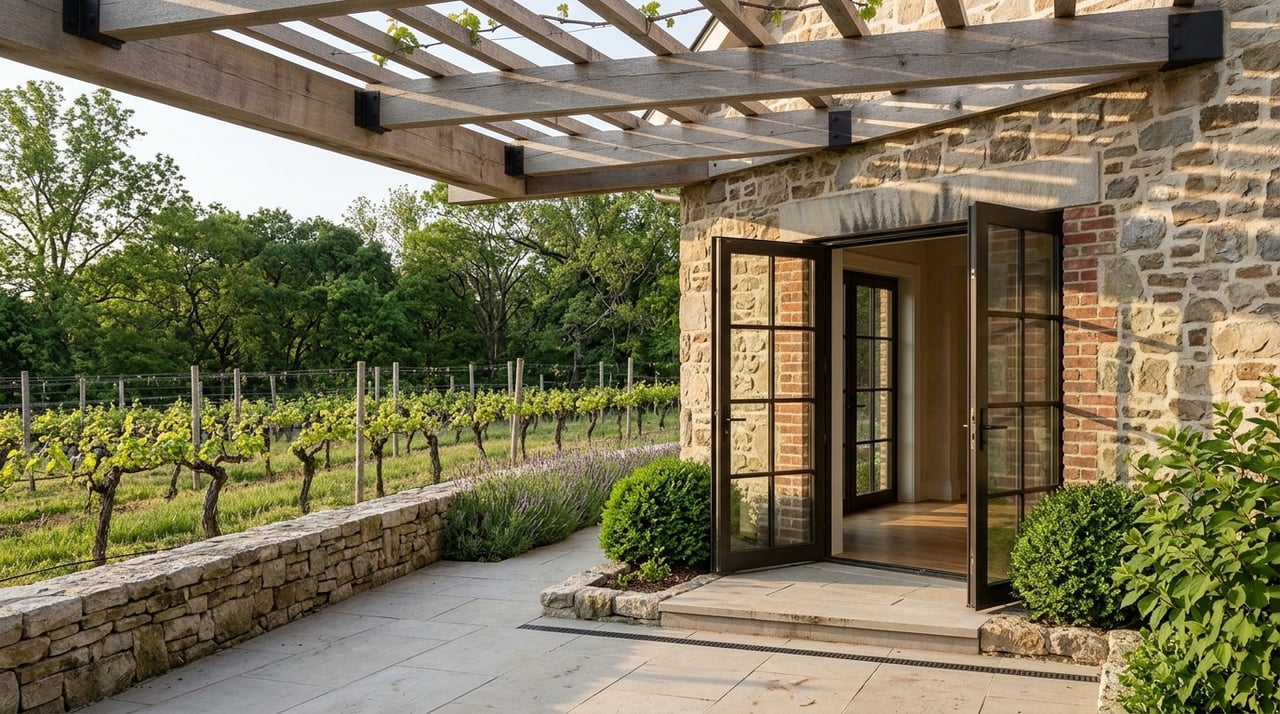
What does luxury look like when it feels tied to the land instead of set apart from it? In Delaplane, that answer often comes in the form of vineyard views, rolling acreage, mountain backdrops, and homes designed for both quiet retreat and memorable gatherings. If you are drawn to the idea of a country estate that blends beauty, function, and long-term value, Delaplane offers a lifestyle worth understanding. Let’s dive in.
Why Delaplane Feels Different
Delaplane sits in the heart of Fauquier County’s horse-and-wine-country landscape. Local tourism sources describe the area as part of the Blue Ridge foothills, where rolling land, horse farms, and vineyard settings shape the experience of daily life.
That setting is a big part of the appeal. Delaplane is about 40 miles west of Washington, D.C., and Northern Virginia wine country is positioned as barely an hour from the city. For many buyers, that means you can enjoy a true rural retreat without feeling disconnected from the broader region.
A Real Wine-Country Destination
Delaplane is not simply near a few tasting rooms. Visit Fauquier notes that the village is home to around 15 wineries and vineyards, while Fauquier County says the county has more than 32 vineyards, breweries, and cideries.
The scale becomes even clearer when you look at the Fauquier County Wine Trail. Virginia.org says the trail includes 24 wineries and stretches from Delaplane off Route 17 to Sumerduck off Route 29. That kind of density creates a lifestyle that feels established, active, and authentic.
For you as a buyer, that matters because it supports more than weekend recreation. It shapes the rhythm of the area, from scenic drives to destination-style entertaining and a stronger sense of place.
What Defines the Vineyard Estate Lifestyle
A vineyard estate in Delaplane is usually less about one fixed house style and more about how the home lives on the land. Local examples point to a lifestyle centered on views, terraces, flexible acreage, and spaces that connect indoor comfort with outdoor beauty.
Delaplane Cellars offers a useful picture of that experience. The winery highlights terrace seating that overlooks vineyards, valleys, and mountain ranges, and its design is meant to complement the surrounding agricultural landscape.
Barrel Oak shows another side of the local model. Its large tasting room, expansive vineyard views, outdoor patio, wine loft, fireplace, and event-friendly layout reflect the kind of atmosphere many estate buyers imagine when they picture a signature country retreat.
These examples help explain why the most appealing properties in Delaplane often prioritize a few core elements:
- Broad views over open land
- Terraces and outdoor entertaining areas
- Flexible acreage for agricultural or equestrian use
- A setting that feels private but not isolated
- Architecture that fits the rural landscape
Indoor-Outdoor Living Matters Here
In many luxury markets, square footage leads the conversation. In Delaplane, the experience of the land often matters just as much. A home can feel elevated because of how it sits on the property, how it frames the view, and how naturally it supports gathering outdoors.
That is one reason vineyard-adjacent estates tend to resonate so strongly. They offer a setting where mornings can feel quiet and restorative, while evenings can easily shift into hosting friends on a terrace or lawn with a backdrop of vines, fields, or mountains.
Lost Mountain Vineyards adds another layer to this idea. Because it operates by appointment, it reflects a more private and curated experience, which mirrors what many buyers want in an estate setting: beauty, discretion, and a sense of intention.
Vineyards and Equestrian Life Often Overlap
Delaplane’s appeal is not limited to wine-country aesthetics. The area is also deeply connected to equestrian life, which is one reason so many properties feel multidimensional rather than purely decorative.
Virginia law includes both wineries and horseback riding within agritourism activities. Locally, that overlap feels natural. Fauquier tourism describes the area as hunt and wine country, and Great Meadow strengthens that identity as a 374-acre equestrian event park in the middle of Virginia’s horse community.
For buyers looking at larger estates, this can open up a more flexible vision for ownership. You may be looking for vineyard character, horse amenities, or a property that balances both. In Delaplane, that combination fits the local lifestyle rather than feeling unusual.
The Land Is Part of the Investment
One of the most important things to understand about a Delaplane vineyard estate is that the land itself is a major part of the value. Views, privacy, open space, and usable acreage are not just attractive features. They are central to why these properties feel special.
Fauquier County’s preservation policies reinforce that point. The county supports conservation easements and a Purchase of Development Rights program, both of which are designed to help protect scenic and agricultural land.
A conservation easement allows a landowner to keep ownership while protecting scenic or historic value. For qualified PDR participation, the county says properties generally need RA or RC zoning, a bona fide agricultural operation, and more than 50 acres.
For you, this means estate ownership in Delaplane often comes with a long-view mindset. Buyers are not just choosing a home. They are choosing a relationship with the land and the rural character that makes the area desirable in the first place.
Ownership Requires More Than a Vision
Beautiful land and a compelling house are only part of the story. In Delaplane, estate ownership can also involve practical land-use questions that deserve careful review before you buy.
Fauquier County requires zoning approval before new structures are built, before grading occurs, or before a property’s use changes. If a farm winery wants extended hours or events, an administrative permit is required.
That matters because a property that looks ideal in photos may have important limits or approvals tied to how you want to use it. If you are considering an estate with agricultural potential, equestrian plans, entertaining goals, or hospitality-related ideas, due diligence is essential.
Questions Worth Asking Before You Buy
When you tour vineyard-adjacent or legacy estate properties in Delaplane, it helps to think beyond finishes and first impressions. A few practical questions can clarify whether the property truly supports your lifestyle.
Consider asking:
- Is this a private estate, a working agricultural property, or something that could support a future commercial use with county approval?
- What zoning applies to the land today?
- Are there existing permits or approvals tied to events, parking, or expanded use?
- Can the acreage support horses, vines, or other agricultural goals?
- Is any portion of the property under a conservation easement?
- How does the home’s layout support outdoor entertaining and year-round use?
These questions do not take away from the romance of the setting. They help protect it.
Why Delaplane Appeals to Legacy Buyers
Some markets are built around convenience first. Delaplane appeals to many buyers because it offers something more lasting: a sense of stewardship, privacy, and continuity.
Fauquier County’s Agricultural Development office works to promote farming, support economic viability, connect farmers with markets, and encourage farmland preservation and natural resource conservation. That tells you something important about the local culture. Productive land and preserved open space are not side notes here. They are part of the identity of the area.
This is why Delaplane can feel more like a legacy retreat than a conventional luxury market. The strongest properties tend to offer a blend of scenic beauty, functional acreage, and a setting that respects the agricultural character of the region.
The Best Fit for the Right Buyer
The vineyard estate lifestyle is not just about owning something impressive. It is about choosing a property that supports the way you want to live, host, and spend time.
For some buyers, that means a refined weekend retreat with sweeping views and elegant outdoor spaces. For others, it means a full-time home with room for horses, land stewardship, and a quieter daily pace. In Delaplane, both visions can feel grounded in the same landscape.
If you are drawn to vineyard estates in Hunt Country, local knowledge matters. The right guidance can help you evaluate not just the home itself, but also zoning, acreage, land use, and the subtle lifestyle differences from one property to the next. When you are ready to explore Delaplane with a clear strategy and a tailored approach, connect with Kristin Dillon-Johnson.
FAQs
What makes Delaplane, Virginia appealing for vineyard estate buyers?
- Delaplane combines a well-established wine-country setting, rolling land, Blue Ridge foothill views, and a strong horse-country identity, all within reach of Washington, D.C.
What features define a vineyard estate lifestyle in Delaplane?
- The lifestyle often centers on broad views, outdoor entertaining space, terraces, flexible acreage, and homes that feel connected to the surrounding agricultural landscape.
Can a Delaplane estate support both vineyard and equestrian uses?
- The local culture strongly supports that overlap, and Virginia agritourism law includes both wineries and horseback riding, though each property’s actual use depends on its land characteristics and county requirements.
What should buyers know about land use for Delaplane estate properties?
- Fauquier County requires zoning approval before building new structures, grading land, or changing property use, so buyers should review approvals and restrictions early in the process.
Are conservation easements common in Fauquier County estate ownership?
- Conservation easements are part of Fauquier County’s long-term preservation approach and can protect scenic or historic value while allowing the owner to retain ownership.
Is Delaplane more of a private retreat market or a winery market?
- It can support both, but private estates and commercial hospitality uses are not the same thing, and any event or expanded winery-related activity may require county approvals and parking plans.