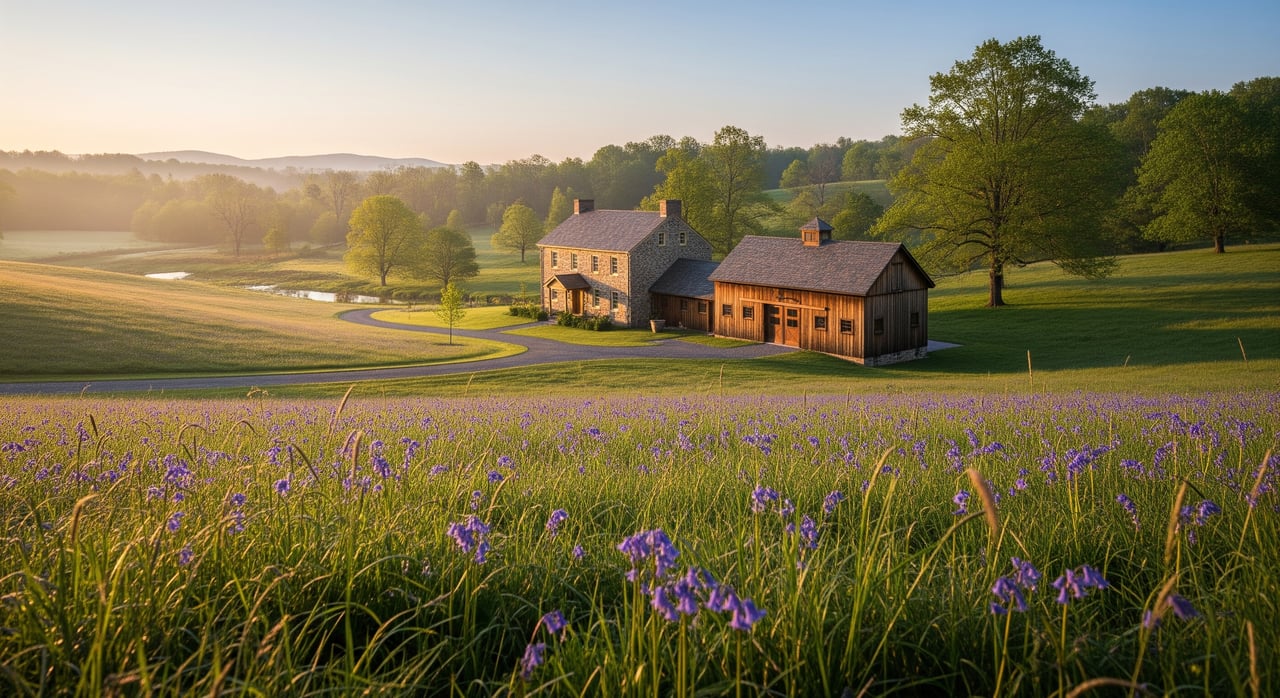
Considering acreage around Purcellville and seeing “conservation easement” in the listing? If you love open land, long views, and the Hunt Country lifestyle, an easement can be a feature, not a flaw. Still, it changes what you can build, how you manage the land, and even how lenders view the property. In this guide, you’ll learn how easements work in Loudoun County, what they allow and restrict, and exactly how to do smart due diligence before you buy. Let’s dive in.
What a conservation easement is
A conservation easement is a voluntary, legally binding restriction recorded on the deed that protects conservation values like scenic views, agriculture, habitat, or historic resources. It typically runs with the land forever and is enforceable by a qualified organization known as the easement holder. In and around Purcellville, common holders include statewide and regional land trusts and, in some cases, local government programs.
It is important to know that an easement does not change local zoning. Loudoun County zoning, permitting, and tax assessments still apply. The easement simply removes or limits certain property rights that zoning might otherwise allow.
In Western Loudoun, you’ll encounter agricultural and viewshed easements, resource protection easements along streams and wetlands, and mixed easements that combine several goals. The specific terms are always in the recorded deed and any amendments, so you should read those closely.
How easements are structured
Recorded deed and holder
The landowner grants specific rights to a land trust or public agency. The recorded deed outlines prohibited uses, permitted uses, and any reserved rights you retain, such as the ability to build within a defined envelope. Because the easement is recorded in county land records, it binds future owners. The holder monitors and enforces the agreement over time.
Key documents to review
Before you make an offer, request the full easement file. The essentials include:
- The recorded easement deed and any amendments.
- The Baseline Documentation Report (BDR) with photos, maps, and narrative that capture the property’s condition when the easement was created.
- Any referenced management plans, such as agricultural, forestry, or habitat plans.
- The holder’s monitoring and stewardship policies.
These documents are your roadmap. They show what the holder will look for during inspections and what changes might require approval.
Common restrictions in Loudoun
Most easements share a familiar set of limits, though language varies. Expect to see:
- Subdivision restrictions or a fixed number of dwelling rights.
- Building envelopes or caps on structure size, location, and height.
- Limits on commercial development, with narrow exceptions for defined agricultural uses.
- Prohibitions on mineral extraction, major land disturbance, or dumping.
- Rules on new roads and utilities, and restrictions on commercial-scale renewable energy.
- Tree removal limits, protected stream buffers, and erosion control requirements.
- Clear statements about public access. Many private easements do not allow public access, while some public-oriented easements permit trails.
Read for specifics. For example, an easement might say “No further subdivision of the Property” or “Construction must occur within Building Envelope A shown on Map 1.” Those lines shape what you can do now and later.
Reserved rights you may have
Many easements preserve rural living while protecting the land. Common reserved rights include:
- A primary residence and sometimes limited outbuildings within a defined envelope.
- Agricultural structures and operations, subject to best management practices.
- Maintenance or modest expansion of existing structures, often with holder approval.
Agriculture, forestry, and utilities
Agriculture and forestry are typically allowed with basic stewardship obligations. You may be asked to follow nutrient management plans or an approved timber plan. Essential utilities, wells, and septic systems are often permitted, though location and scale can be restricted to minimize impacts. If you plan upgrades, verify the details in the deed before you commit.
Stewardship and your obligations
Easement holders monitor properties regularly, often once a year, to confirm compliance and support long-term conservation goals. They rely on industry standards and the property’s Baseline Documentation Report to guide inspections.
As the owner, you usually agree to allow monitoring visits with notice, maintain the land per the easement’s terms, and seek approvals for certain changes. Some easements also involve stewardship or administrative fees, either one-time or ongoing. Ask whether any fees transfer to you at closing.
Amending an easement is generally difficult and may not be possible if it would reduce the property’s conservation values. Assume the recorded terms are long-term. If in doubt, talk with the holder about their process and what they consider when requests arise.
Impact on building and improvements
Building envelopes and approvals
If you plan to build or expand, focus on the building envelope. Easements often define where a house and outbuildings can go, how big they can be, and how tall they can rise. Non-routine changes may require written approval from the holder. Get clarity on timelines and the information they require for review.
Solar, roads, and utilities
Expect limits on commercial-scale solar arrays and new roads. Smaller utility upgrades and residential-scale solar may be allowed, but location and screening could be prescribed. If you are planning a barn, arena, fencing, or new driveway, confirm whether the deed specifies placement and materials or requires pre-approval.
Public access expectations
Public access is either granted or denied within the easement itself. Many privately held easements in Loudoun do not allow public access. If a listing mentions a trail, check whether it is public or private and what maintenance obligations, if any, transfer to you.
Financing, resale, and taxes
Easements affect financing because lenders and title companies must underwrite the restrictions. Some lenders are experienced, while others may need additional documentation. It is wise to loop in your lender early and provide the deed and BDR so they can confirm they will finance the property.
Title insurance is usually available, but you may see exceptions tied to the easement’s restrictions. Discuss these with your title company so you understand coverage.
For resale, an easement can lower development potential, which may reduce value to a developer. At the same time, it can increase appeal to buyers who prioritize protected open space and lower future development density. Transparency is key. A clear BDR, accessible deeds, and reliable holder contacts help preserve marketability.
There can be federal tax incentives when a landowner donates a qualifying conservation easement to a qualified organization. That treatment involves specific rules, appraisals, and filings. If tax benefits matter to your plan, consult an experienced tax professional for guidance on your situation.
Due diligence checklist for Purcellville buyers
Documents to gather
- Recorded easement deed and all amendments from county land records.
- Baseline Documentation Report, maps, and any referenced management plans.
- Holder contact information and written stewardship and monitoring policies.
- Title report with any easement-related exceptions.
- Current survey to compare with easement maps and building envelopes.
- Loudoun County zoning and parcel tax classification, plus any county-held restrictions or PDR terms.
Questions to ask the holder
- What is permitted and what is prohibited for practical items like a barn, fencing, guesthouse, or solar panels?
- Which improvements require approval, and what is your typical review timeline and process?
- Are there stewardship fees or endowment contributions that transfer with ownership?
- How often do you monitor, and what does a site visit involve?
- Under what circumstances would you consider an amendment or partial release?
Operational checks to complete
- Confirm that your intended agricultural or forestry uses are allowed and whether management plans are required.
- Verify septic, well, and utility constraints before planning upgrades.
- Share the deed and BDR with your lender and title company before you write an offer to avoid surprises.
Red flags to note
- Vague language about “future uses” or open-ended reserved rights that create uncertainty.
- A missing or weak Baseline Documentation Report.
- Approval language that is unclear or entirely at the holder’s sole discretion without standards.
- A holder that appears inactive or lacks capacity to monitor and respond.
- Easement provisions that might conflict with county septic or watershed rules.
Real-world scenarios
Hobby farm and residence
If you want a residence with a small hobby farm, confirm that the easement allows a dwelling and that a building envelope exists with enough room for your house, barn, and turnout. Check size and height caps and whether equestrian features require approval. Ask about fencing, arenas, and farm driveways since placement can be restricted.
Future subdivision plans
If you hope to subdivide later, know that many conservation easements prohibit subdivision beyond specific reserved rights. If subdivision flexibility is essential, you may be better served focusing on parcels without easements or parcels that expressly reserve additional dwelling rights.
Major improvements or commercial uses
Large additions, commercial operations, or utility-scale solar are commonly limited or prohibited. Engage the holder early with concept plans if you are considering significant changes. Be prepared for a low likelihood of approval if your plan conflicts with the property’s conservation purposes.
Borrowing to purchase
Bring your lender in early and provide the recorded deed and BDR. Ask whether the lender needs any specific acknowledgments and whether their underwriting team has financed eased properties before. Clear documentation up front can keep your loan process on track.
Working with a local expert
Buying eased land in Purcellville is as much about fit as it is about features. You want open views, privacy, room for horses or gardens, and the confidence that your plans align with the easement. A local, land-savvy advisor can help you read the deed, coordinate with the holder, and make sure your lender and title team are aligned.
If you’re ready to evaluate an eased property or want to explore acreage that fits your lifestyle, reach out. You will get hands-on guidance, careful review of the easement and BDR, and a clear path from offer to close with the right questions asked at the right time. Connect with Kristin Dillon-Johnson to walk land, talk through your plans, and move forward with confidence.
FAQs
What is a conservation easement in Loudoun County?
- It is a recorded, legally binding agreement that limits certain uses of the land to protect conservation values, runs with the land, and is enforced by a qualified holder.
Can I build a barn or arena on an eased property?
- Possibly, if the easement allows agricultural structures and your plans fit within size, location, and approval limits in the deed and building envelope.
Will a conservation easement affect my mortgage approval?
- It can, since lenders and title companies must underwrite the restrictions, so share the deed and Baseline Documentation Report with your lender early.
Does a conservation easement grant public access to my land?
- Not necessarily, because many private easements in Loudoun do not allow public access and any access terms will be stated clearly in the recorded deed.
Do conservation easements reduce property taxes in Virginia?
- Not by default, since local real estate taxes and land-use assessments are separate from easement status, so check current tax classification for the specific parcel.
How do I verify what is allowed before I buy?
- Obtain the recorded easement and amendments, review the Baseline Documentation Report and maps, and confirm permitted uses and approval steps directly with the holder.